"For 300 years, Spain ran a treasure pipeline from the Americas to Europe. Every year, fleets of galleons carried silver, gold, and gems from Mexico and South America back across the Atlantic. The route took them right past Florida — and Florida's storms and reefs sent many of them to the bottom. That's how Florida's east coast got its name: the Treasure Coast."
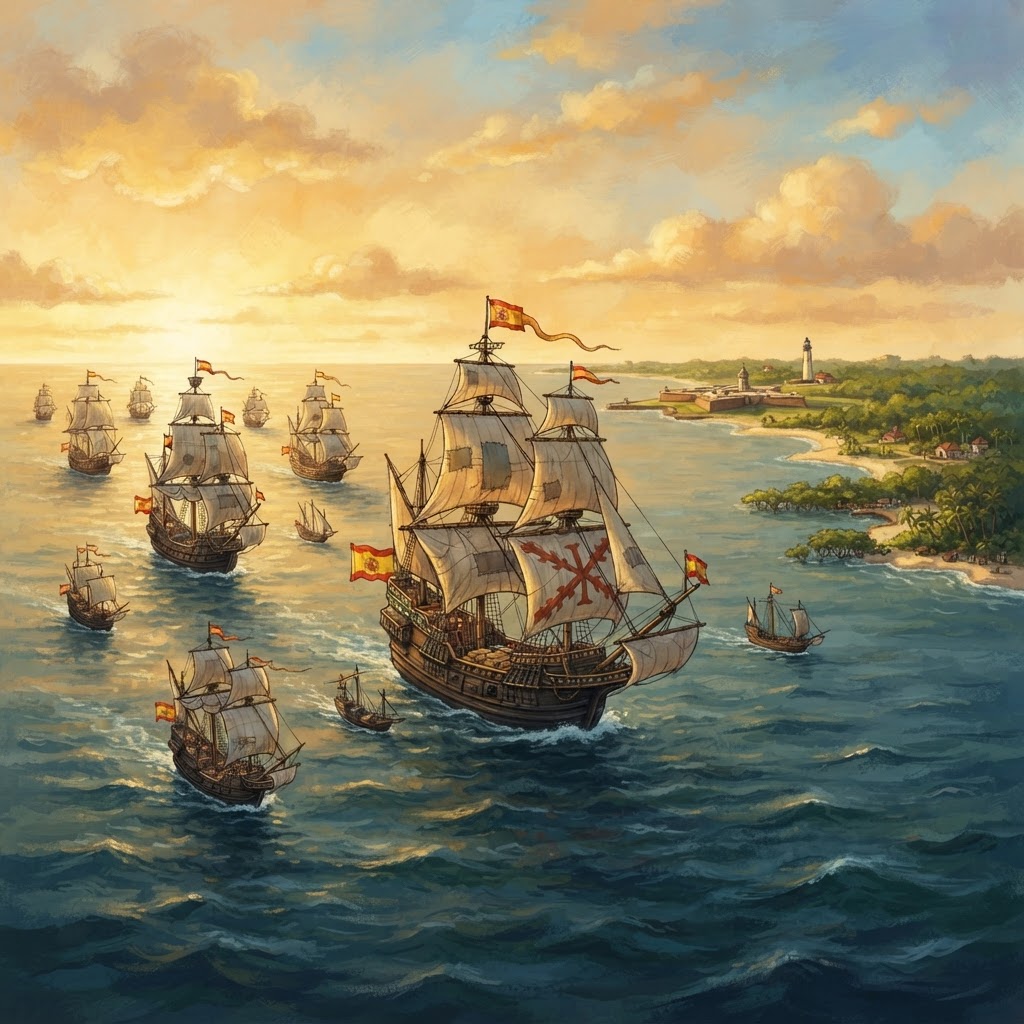
Spain's Treasure Fleets
From the 1500s to the early 1800s, the Spanish Empire operated a system of treasure fleets — the 'plate fleets' (from the Spanish 'plata,' meaning silver). Each year, fleets of dozens of galleons would sail from Spain to the New World, split into two groups (the New Spain fleet serving Mexico and the Tierra Firme fleet serving South America), load silver, gold, emeralds, and other valuables, then rendezvous in Havana and sail home together for safety. The route from Havana took the fleets north through the Florida Straits, then east along Florida's east coast, catching the Gulf Stream current back toward Europe. This put the fleets directly along Florida's Atlantic coast — and directly in the path of hurricanes. The waters off Brevard, Indian River, St. Lucie, and Martin counties are littered with the wrecks of these galleons. This is the origin of the name 'Treasure Coast.' Over the centuries, hundreds of millions of dollars (in today's value) of Spanish treasure has been recovered from Florida's waters — and much more remains.