
"See that shiny balloon floating up there? It looks beautiful — but it's heading straight for the ocean. And unlike latex balloons, mylar balloons never go away. I want to tell you why these shiny party favors are one of the worst forms of debris that wash up on our Florida beaches."
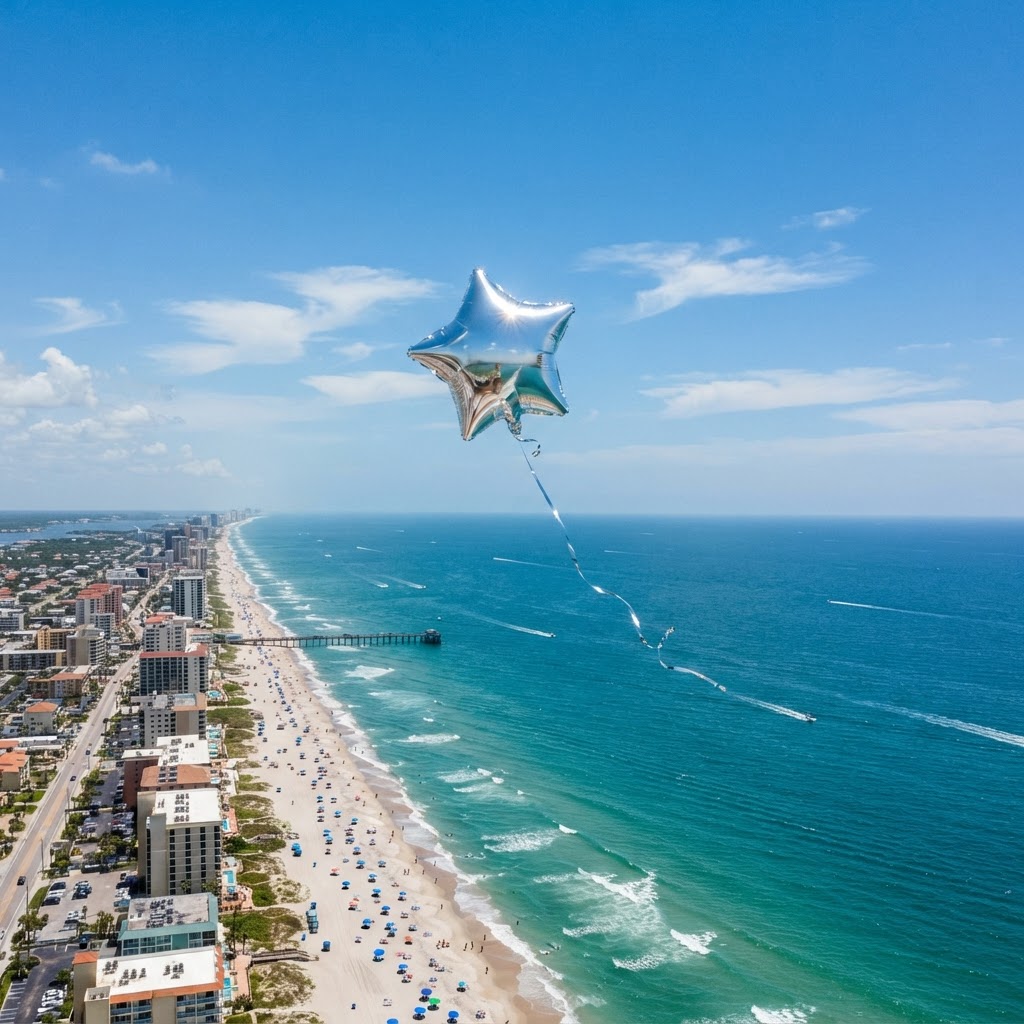
Mylar Balloons — The Debris That Floats Forever
Mylar balloons (also called foil balloons) are made from a thin sheet of plastic coated with metallic film — usually aluminum. Unlike latex balloons, which are natural rubber and biodegrade over months, mylar balloons are made of nylon or polyester film with a metallic coating. They don't stretch, they don't pop into small pieces, and they do not biodegrade — not in a year, not in a decade, not in a century. Once a mylar balloon escapes into the environment, it stays there indefinitely, breaking into smaller and smaller pieces but never truly disappearing. Every mylar balloon ever released since they were invented in the 1970s is still somewhere on this planet — in a landfill, tangled in a tree, floating in the ocean, or broken into microplastic fragments. That's the core problem, and it's why mylar balloons are now classified as a hazardous form of marine debris by NOAA and the EPA.