"No place in America has a longer, more intense hurricane history than Florida. A hurricane is a giant rotating storm that can be 300 miles across, with winds over 150 mph and a wall of water called a storm surge. Florida sticks out into the path of Atlantic hurricanes like a finger waiting to be hit. The storms have shaped Florida's history, its buildings, its laws, and its environment — for better and worse."
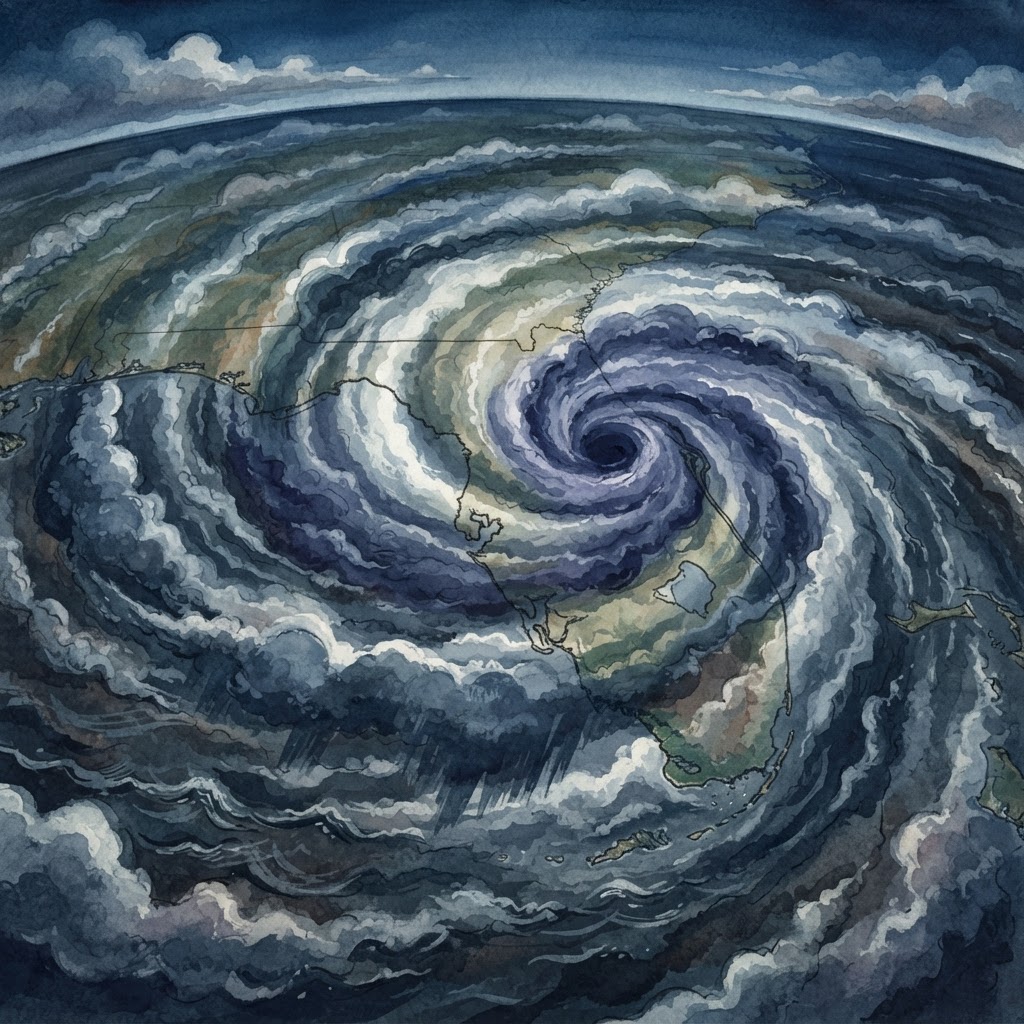
Florida's Hurricane Legacy
A hurricane is a massive rotating storm that forms over warm ocean water. Hurricanes can be 300+ miles across, with sustained winds from 74 mph (Category 1) to over 157 mph (Category 5). The deadliest part of a hurricane is usually not the wind but the storm surge — a wall of ocean water pushed onto land that can rise 20+ feet above normal sea level. Florida is the most hurricane-prone state in the US for three reasons: it's a peninsula surrounded by warm water on three sides; it sits directly in the Atlantic hurricane belt (storms form off Africa and travel west across the Atlantic toward the Caribbean and Gulf); and it has 1,350 miles of coastline. Florida has been hit by more hurricanes than any other state — over 120 direct hurricane strikes since records began in the 1850s. These storms have shaped Florida's development: building codes, drainage systems, insurance, and even the shape of the coast itself all reflect centuries of hurricane impact. Understanding hurricane history is essential to understanding Florida — and to protecting its future in a warming climate.