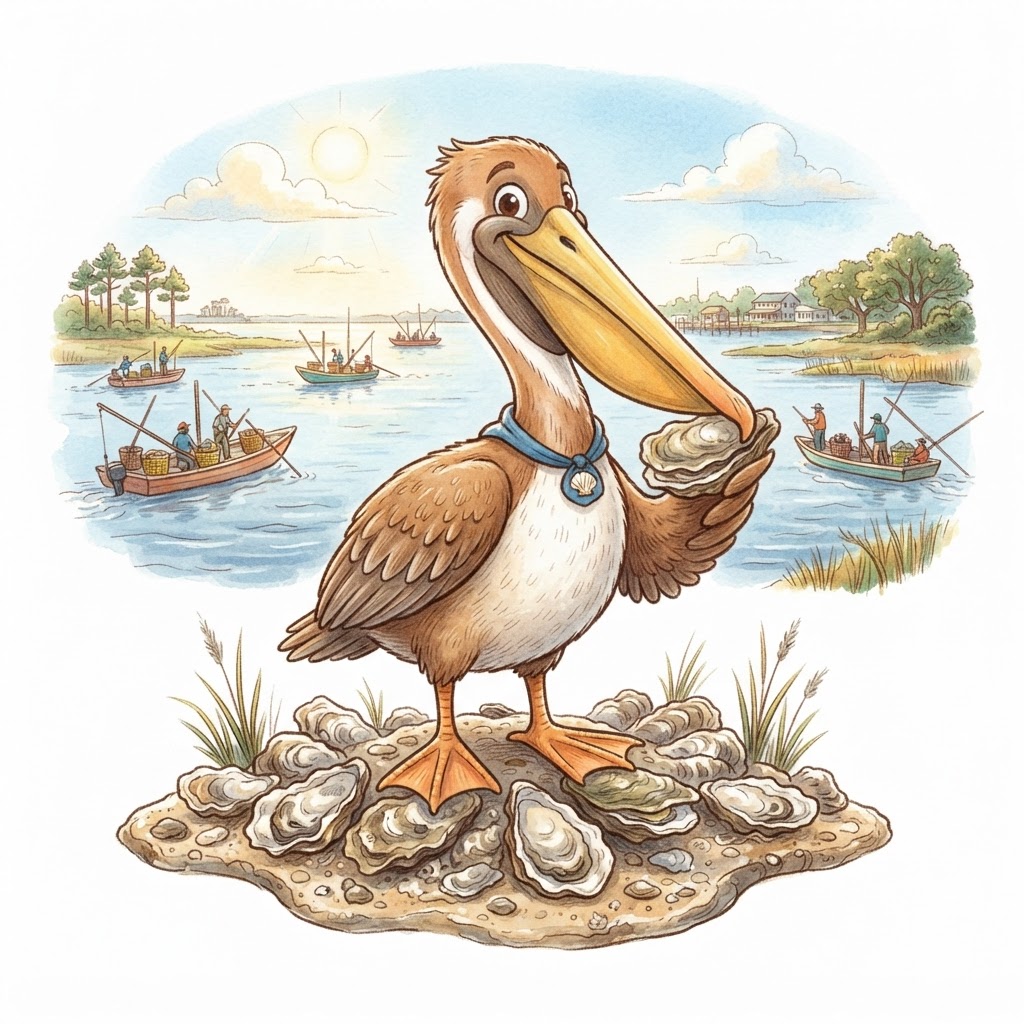
"For over 150 years, the little Gulf coast town of Apalachicola produced the finest oysters in America. At its peak, 90% of Florida's oysters came from Apalachicola Bay. The town was built on oysters — the docks, the ice houses, the whole economy. Then the oysters started to disappear. The story of Apalachicola is the story of how fragile an estuary can be — and how a way of life can vanish."
Apalachicola — Florida's Oyster Capital
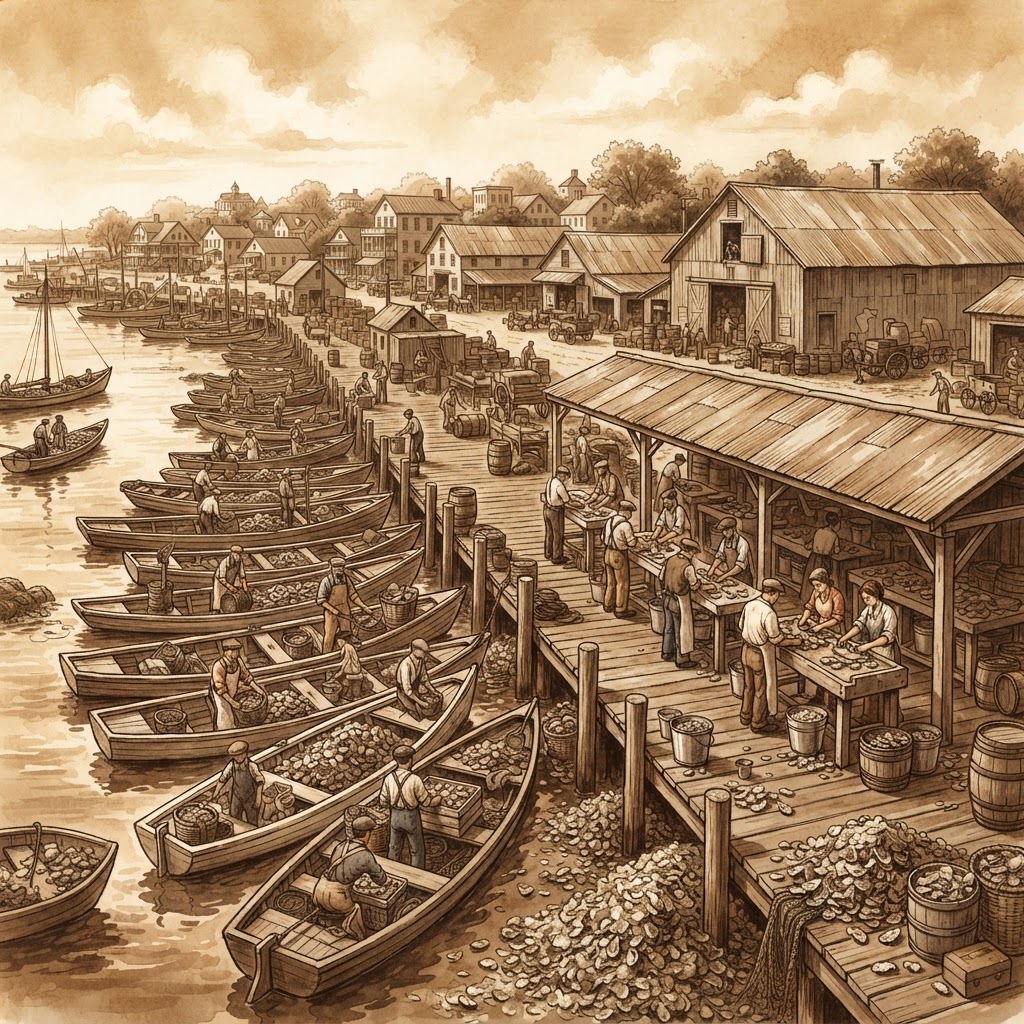
Apalachicola is a small town on the Gulf coast in the Florida Panhandle, at the mouth of the Apalachicola River. For over 150 years, it was one of the most productive oyster fisheries in the world. At its peak in the mid-1900s, Apalachicola Bay produced 90% of Florida's oysters and about 10% of all oysters consumed in the US. The reason for this extraordinary productivity was the Apalachicola River, which flows from Georgia into the bay, delivering fresh water and nutrients that create a perfect estuary — the mix of fresh and salt water that oysters need. The town of Apalachicola was built around the oyster industry: docks and processing houses lined the waterfront; ice plants kept the oysters fresh; and tongers (oyster harvesters using long tongs) went out daily. The oyster was not just a product — it was the identity of the town. Generations of Apalachicola families made their living on the water. Today, Apalachicola is a struggling fishing town and a tourist destination, and the oysters that once defined it are mostly gone. Understanding why is one of the most important estuary lessons in Florida.